
The formal start of Western dance in Japan dates back to 1912. One year after the Imperial Theatre, the first full-scale Western style theatre, opened in Tokyo, Keinosuke Nishino, one of its directors, invited Giovanni Vittorio Rossi, an Italian ballet instructor who had exercised at the ballet school of the Scala in Milano and in London, to take responsibility for its ballet section. Baku Ishii (1886-1962), a violonist, Michio Ito (1893-1961), Masao Takada (1895-1929) and Seiko Takada (1895-1977), the first generation of modern dancers in Japan, learned classical dance with him. Ishii after an argument left the Imperial Theater. Influenced by the Ballets Russes and Isadora Duncan, he founded the Buyoushi, dance-poesy movement in 1916. From 1922, he traveled to Europe and Germany to study with Emile Jaques-Dalcroze and Mary Wigman, and performed there, returning to Japan in 1925. The 4 of them learned about Eurythmics with Mary Wigman, Michio Ito as early as 1916, studying at the Dalcroze Institute in Hellerau, and the Takada couple around 1924. Back to Japan in 1925, they founded the Takada dance company.
Takaya Eguchi (1900-1977) studied dance with Masao and Seiko Takada, establishing an abstract dance based on Neue Tanz. He was quite influential, founding a dancer’s organization and publishing a journal on modern dance, Dance Works.
Tatsumi Hijikata (1928-1986) started dancing in the studio of a disciple of Takaya Eguchi and Misako Miya, Katsuko Masumura. Kazuo Ohno (1906-2010) himself studied with Baku Ishii, in 1933,as he had been engaged by his employer, the Soshin Girls School, to learn dancing for his position. From 1936, he joined himself also the lessons of Eguchi and Miya. Buto thus finds part of its influence in the first founders of modern Japanese dance, and developped as a movement in itself. Akaji Maro (Dairakudakan company), Yoko Ashikawa, Sanae/Carlotta Ikeda (Ariadone company) and Min Tanaka are the other major names of Ankoku Buto at its foundation. Ushio Amagatsu (1949-2024), with the support of Gérard Violette and the Théâtre de la Ville de Paris was successful in diffusing butoh, with a form which at some stage is bringing it back to contemporary dancing, taking some distance from the darker forms of the movement.
Speaking of France, Hideyuki Yano (1943-1988) who was very much influenced by pantomime and his professor Jean Nouveau Ohta really deployed his choregraphic skills in France, founding a multi-national company, and gaining such recognition that he finally headed the Centre National de Choregraphie of Besançon. As he created a variation based on Yeats Hawks Well, which was created by Michio Ito, we are also connecting to the founders. Kaori Ito (1980-), director since 2023 of the Centre Dramatique National de Strasbourg, continues to build bridges in contemporary dance between Japan and France and more widely Europe; as does Saburo Teshigawara (1953-), who continues to create new pieces each quarter, while travelling to share his works.
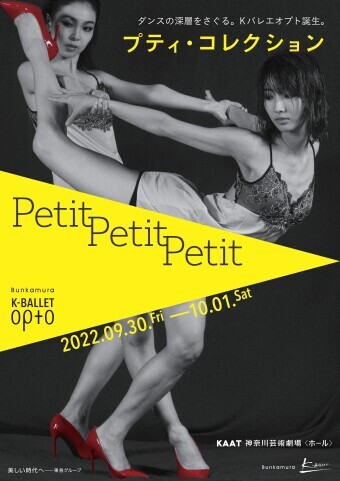
Among the many companies, in 2025, Noism, founded in 2004 by Jo Kanamori, holds a particular position, being the resident company of Ryutopia, the first public choregraphic center in Japan. Its founder was initially distinguished in the world of classical dance but quickly joined the company of Maurice Béjart in Genève, as did his associate and accomplice, Sawako Iseki. Although K-Ballet from Tetsuya Kumakawa is focused on classical dance, it also supports since 2022 a contemporary dance company, in collaboration with Bunkamura Orchard hall, K-Ballet Opto.
Author – L.Wolff
Others pages to check :
– Contemporary dance venues in Japan
– Tokyo butoh in 2025
– Festivals in Japan
– 2025/26 season
– A short history of theater in Japan
 Tokyo stages and live arts, theatre and biodiversity
Leave a comment